Winter is when Türkiye's hot-spring towns come into their own: cold air outside, steaming water inside, and short days that suit a slow rhythm. The sector is busy, too — on 9 November 2026 Para Dergisi reported 26 new thermal hotel projects across the country — seven opening or due to open in 2026 and 19 planned for 2027 or later. For a traveller, though, the real question is simpler: which town fits your trip, how do you get there in winter, and what does a day there actually look like? This guide compares four well-documented options and gives you a way to choose.
Four thermal towns at a glance
- Bursa (Çekirge): a big historic city with hot-spring hotels on its western side. Best if you want culture and bathing in the same trip.
- Yalova (Termal): a compact thermal valley in forested hills south of the Sea of Marmara. Best for the shortest escape from Istanbul.
- Afyonkarahisar: an inland city that GoTürkiye calls the thermal capital of Türkiye, with large resort-style complexes. Best for a do-nothing stay with pools on site.
- Pamukkale and Karahayıt (Denizli): white travertines, the ancient city of Hierapolis and a quieter spring village nearby. Best when sightseeing comes first and warm water second.
Bursa (Çekirge): a city break with hot water
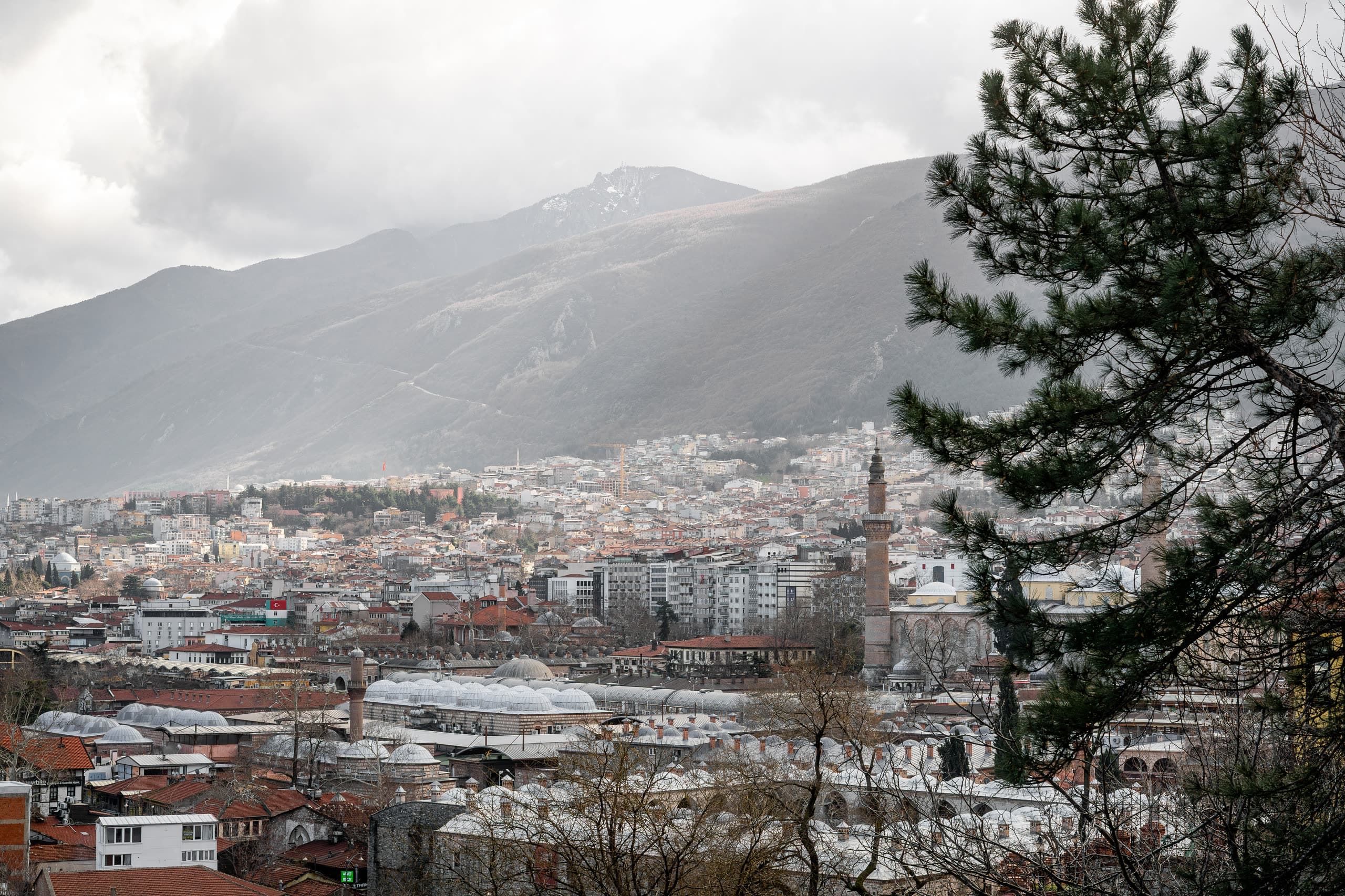
Bursa was the first capital of the Ottoman Empire, and GoTürkiye notes that to most Turkish people it is simply a city of thermal baths. The hot-spring quarter is Çekirge, which lies well to the west of the centre and its main sights, so plan on a bus or taxi between the two. Çekirge is known for its mineral water and for the many hotels built for people who come to use it; GoTürkiye mentions the Çekirge spring by its nickname, “Silver Waters”. The mosque of Murad I Hüdavendigâr, dated 1366, stands in the same district. Further out, the Oylat springs near İnegöl sit at the foot of Uludağ.
Bursa works best when you want a varied winter break: a historic hamam-style bath one morning, the old city and the village of Cumalıkızık another day, and perhaps the gondola up Uludağ, which GoTürkiye describes as a snowy wonderland in winter. Our Bursa destination guide covers the city's main sights.
Yalova (Termal): the shortest escape from Istanbul
GoTürkiye describes Yalova as about an hour from Istanbul, Kocaeli and Bursa, and as a destination for sea, thermal springs and nature. Its thermal facility in Termal groups four traditional baths — Valide, Kurşunlu, Kral and Açık — in forested hills, with springs used since Roman and Ottoman times. GoTürkiye's one-day route suggests bathing between 9:00 and 12:00, when it is quieter, then visiting the Yalova Atatürk and Children Museum, a wooden house built in 1929, and walking the Termal stream trail towards Sudüşen Waterfall.
From Istanbul, fast ferries run to Yalova from Yenikapı (around 1 hour 15 minutes) and Pendik (around 45 minutes), and a car ferry crosses between Eskihisar and Tavşanlı. Termal is roughly 12 km inland from the Yalova pier, with minibuses and taxis covering the last stretch. In winter, strong southerly winds can cancel the fast ferries; the Eskihisar–Tavşanlı crossing inside the gulf is reported to be less affected. These figures come from a commercial ferry guide, so confirm times with İDO and the other operators before you travel.
Afyonkarahisar: resort pools in the interior
Afyonkarahisar is the choice for a stay built around a large hotel with its own pools. GoTürkiye presents it as a year-round destination for thermal and leisure activities and lists several thermal areas: Gazlıgöl in İhsaniye, the Ömer and Gecek springs in Bolvadin, the Heybeli centre with roots going back to Roman times, and Hüdai near Sandıklı, known for mud baths. GoTürkiye's thermal overview gives spring temperatures here of 42 to 53°C. In town, Karahisar Castle stands on a volcanic hill in a protected area of the centre, and the local table is known for Afyon kaymağı (clotted cream), lokum and poppy-seed flavours.
Afyon sits at a crossroads in western Anatolia. If you prefer rail, Eskişehir is a hub on the high-speed line between Istanbul and Ankara, and Rail Turkey listed one daily regional train from Eskişehir to Afyon taking around three hours (page last updated in 2024). Check the current timetable with TCDD Taşımacılık, and see our Istanbul–Ankara high-speed train checklist for booking the first leg. More on the city is in our Afyon guide.
Pamukkale and Karahayıt: travertines first, pool second
Hierapolis and the Pamukkale travertines are on the UNESCO World Heritage List, and the Ministry's museum portal notes an antique pool and baths within the site. Its page also says the pool area is open on a temporary basis, so check muze.gov.tr for current status and opening hours rather than relying on older guides. GoTürkiye gives a water temperature of around 35°C at Pamukkale. Nearby Karahayıt has red, green and brown travertine basins tinted by oxidised metal, with water around 60°C, and GoTürkiye describes it as a quieter spot favoured by locals.
Getting there: Denizli Çardak Airport lies 63 km east of Denizli, with bus, taxi and car-rental options listed by DHMİ. By rail, the Pamukkale Express links Eskişehir and Denizli once a day in around eight hours, according to Rail Turkey (page last updated in 2024); check the current timetable with TCDD Taşımacılık before you plan around it. From the Antalya coast, Pamukkale is the most natural of the four to add to a south-western road trip. Our Pamukkale guide has more on the site itself.
If you are based in Ankara, GoTürkiye also lists the Kızılcahamam and Haymana springs in Ankara province, which can serve as a short hop when you do not want a long transfer.
Choose by your situation
- You have one free day in Istanbul: Yalova. Leave early, bathe in the morning, walk in the forest and be back by evening if the ferries run.
- You want culture and bathing in one base: Bursa. Stay near Çekirge and spend the days in the old city.
- You want to stay put for two or three nights: Afyonkarahisar, where resort complexes keep pools, meals and rooms under one roof.
- You are already on an Aegean or Antalya itinerary: Pamukkale and Karahayıt, combined with Hierapolis.
- You are travelling by train from Ankara or Istanbul: Afyon via Eskişehir, or Bursa and Yalova by road and ferry from Istanbul.
- You are unsure about winter conditions: choose the town with the simplest return option and keep a spare half-day.
What a thermal day looks like
A good thermal day is mostly about pacing. Arrive in the morning, when pools tend to be calmer — GoTürkiye recommends the 9:00 to 12:00 window at Yalova. Shower before entering, take a first short soak, then rest, drink water and cool down before going back in. Hot water is tiring, so most people do two or three short sessions rather than one long one. In a hamam-style kaplıca you may add a kese scrub with an attendant; in a resort you are more likely to move between indoor and outdoor pools. Lunch is usually slow and simple, and the afternoon is the time for a walk — the castle in Afyon, the stream trail in Termal, Hierapolis at Pamukkale or the old bazaars in Bursa. Evenings are quiet, which is the point.
Practical checklist
- Day pass or hotel stay: many baths and some hotels sell day access, but the rules vary by venue. Ask in advance whether a day ticket exists and what it includes.
- Mixed or separate sections: historic baths often have separate men's and women's sections or set hours, while resort pools are usually mixed. Check the arrangement locally before you go.
- Swimwear: bring your own, plus flip-flops. Some pools require a swim cap or a particular type of swimwear; ask at reception.
- Health: if you have a health condition, are pregnant or are travelling with young children, ask your doctor before using hot pools, and follow the posted time limits.
- Winter driving: inland routes to Afyon and Denizli can see snow and ice. Check road conditions and allow daylight margins.
- Ferry slack: if you rely on Yalova ferries, avoid tight connections and know the road alternative in case sailings are cancelled.
- Timing: weekends and Turkish school holidays are busier; a midweek visit is calmer.
Etiquette in a kaplıca
Speak quietly, shower before entering the pool and keep phones away from other bathers. In single-sex sections, people usually keep a peştemal (thin cotton wrap) or swimwear on; follow what others do and ask the attendant if unsure. Tip the attendant if you have a scrub. Do not let children run on wet marble, and leave the pool if you feel light-headed.
For the bigger picture on cold-season travel, see our guide to Türkiye in winter and the month-by-month guide to the best time to visit. Timetables, bath hours and site openings change, so use the figures here as a starting point and confirm them with the operators and official pages before you go.
Sources and further reading
- Healing Waters of Anatolia — GoTürkiye (Türkiye Tourism Promotion and Development Agency)
- Best Thermal Baths and Springs in Türkiye — GoTürkiye (Türkiye Tourism Promotion and Development Agency)
- Bursa — GoTürkiye Destinations — GoTürkiye (Türkiye Tourism Promotion and Development Agency)
- 1-Day Yalova Thermal Spring Route — GoTürkiye (Türkiye Tourism Promotion and Development Agency)
- Yalova GoTürkiye — GoTürkiye (Türkiye Tourism Promotion and Development Agency)
- Afyon — GoTürkiye Destinations — GoTürkiye (Türkiye Tourism Promotion and Development Agency)
- Hierapolis Pamukkale Travertine Archeological Site — T.C. Kültür ve Turizm Bakanlığı (muze.gov.tr)
- AIP Türkiye AD 2 LTAY — Denizli/Çardak — DHMİ (General Directorate of State Airports Authority)
- Eskişehir–Afyon regional train — Rail Turkey
- Pamukkale Express (Eskişehir–Denizli train) — Rail Turkey
- Yalova Termal Kaplıcaları — Feribot + Ulaşım Rehberi — Feribot Seferleri
- Çekirge Thermal Baths, Bursa — Turkey Travel Planner
- Termal turizmde yeni yatırım dalgası — Para Dergisi
Access conditions, schedules and prices can change. Check the linked official source before travelling. Read our editorial and review policy.