If your trip to Türkiye falls between early February and mid-March 2027, it will overlap with Ramadan (Ramazan in Turkish) and possibly with Ramazan Bayramı, the holiday that follows it. For most visitors this is not a reason to change plans. Cities keep working, sights stay on the itinerary and evenings can be especially lively. What changes is timing: when restaurants fill up, when roads are busiest and which days intercity transport is under pressure. This guide sets out the expected dates, what you are likely to notice, and which days deserve extra planning.
The expected 2027 dates at a glance
Turkish news reports citing the religious-days calendar of the Presidency of Religious Affairs (Diyanet) give the following dates. We could not open Diyanet’s own calendar page while preparing this article, so treat them as expected dates and confirm them closer to travel. Evrensel and Dünya both report a start on 8 February and a first holiday day on 9 March, and the independent Turkey Travel Planner lists the same range.
- Sunday 7 February 2027: first evening of Ramadan (first teravih prayers; the first pre-dawn sahur meal is that night).
- Monday 8 February 2027: first day of fasting.
- 5 March 2027: Kadir Gecesi (the Night of Power), listed in the reported calendar.
- Monday 8 March 2027: arife, the eve of the holiday and the last day of Ramadan.
- Tuesday 9 to Thursday 11 March 2027: Ramazan Bayramı, also known as Şeker Bayramı.
Public holiday arrangements: what is known and what is not
Milli Gazete reported on 14 October 2026 that the official holiday begins at 13:00 on the arife (8 March) and runs through the three Bayram days, about three and a half days in total. It also reported that no extension had been announced. Because the holiday falls Tuesday to Thursday, Friday 12 March would be a normal working day unless the government decides otherwise. Some residents may still take personal leave to create a longer break from Saturday 6 to Sunday 14 March, which can matter for demand on trains, buses and flights.
Any bridge holiday would be an official decision announced closer to the date, so we cannot say whether one will happen. In the weeks before your trip, search Turkish news for “2027 Ramazan Bayramı tatili” or check the Official Gazette (Resmî Gazete) for an announcement. If an extension is announced, expect the busy travel window to widen.
What visitors notice during Ramadan
GoTürkiye’s Ramadan page describes daytimes as calmer and evenings as lively. Lunch at restaurants is often less busy, while iftar, the meal that breaks the fast at sunset, fills restaurants and homes. Popular places can reach full capacity, so book ahead if dinner at a specific restaurant matters to you. The same source notes that traffic is at its heaviest shortly before sunset and eases once iftar begins. That makes the last hour before sunset a poor time for a taxi to the airport or a tight transfer.
Sunset moves later through February and early March, so iftar times change by the day. Check the evening (akşam) time for your city on Diyanet’s prayer-times service or a local app on the day, rather than relying on a fixed hour. You may also hear drummers in the early morning waking people for sahur, see queues at bakeries for the round Ramazan pidesi before sunset, and find some restaurants open late into the night.
Ramadan atmosphere in Istanbul
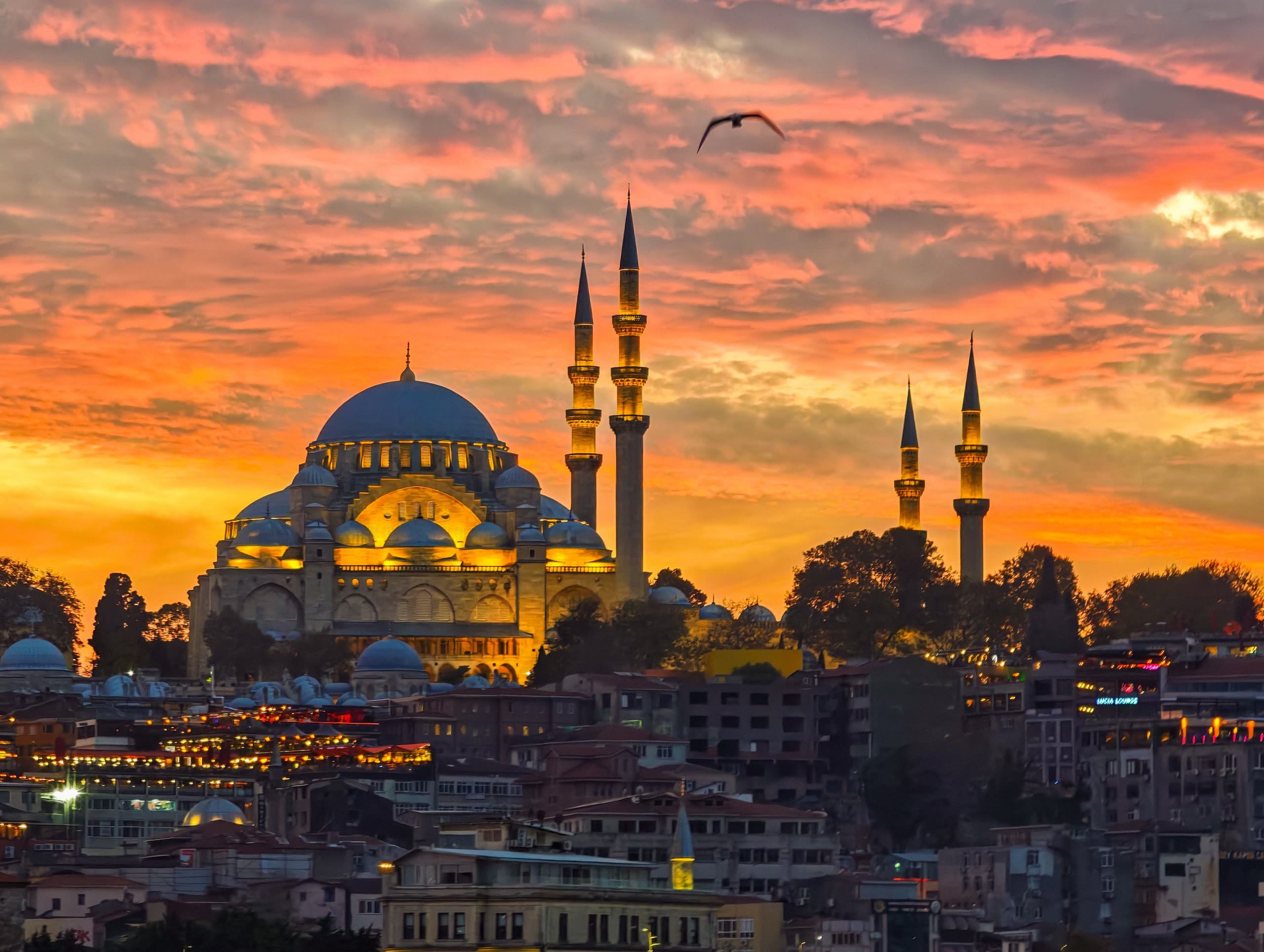
GoTürkiye highlights Sultanahmet with the Blue Mosque and Hagia Sophia, Süleymaniye, Eyüp Sultan and Fatih as places to feel the season, and mentions Ramadan cultural events at Feshane in Eyüp. Programmes vary from year to year, so look for the 2027 listings nearer the time rather than assuming an event will repeat. Squares around major mosques can be crowded in the evening. If you plan to go inside a mosque, our Hagia Sophia Mosque visitor guide covers dress and how visiting works in a functioning mosque, and the same principles apply elsewhere. Visits are best timed outside prayer times.
Ramazan Bayramı: the days that need the most planning
GoTürkiye describes Bayram as a time for family breakfasts and visits to relatives, especially elders. Because visiting family often involves travel, the days around the arife and the end of the holiday are likely to be the busiest for intercity transport, and seats may be scarce. If you plan to take the high-speed train (YHT), a long-distance bus or a domestic flight between about 6 and 14 March, book as soon as sales open for your date and keep your ticket details handy. For the Istanbul–Ankara route, our YHT booking checklist explains how to compare stations and booking channels.
Do not assume that every museum, bazaar or shop keeps normal hours on the first day of Bayram. Turkey Travel Planner says many shops, bazaars and museums close on the first day and reopen on the second and third days, but we could not confirm closures for 2027 from official museum or Grand Bazaar sources. Check muze.gov.tr for state museums and sites, and the venue’s own channels for bazaars and private museums, in the week before. Keeping 9 March as a flexible day for a walk, a ferry ride or a meal makes your plan more resilient.
A short note on etiquette
Visitors are not expected to fast. GoTürkiye asks visitors to be tolerant and understanding and to avoid eating or drinking in front of people who are fasting, and notes that people generally do not eat, drink or smoke on the street during fasting hours. Many visitors find it easiest to have food and drinks in restaurants and cafés rather than while walking down the street, particularly in more conservative neighbourhoods. A friendly “Hayırlı Ramazanlar” during the month or “İyi bayramlar” during the holiday is a warm greeting.
Date-by-date checklist
- Before booking flights: compare your dates with 6–14 March. If your dates are flexible, consider keeping intercity journeys away from 8 March and 11–14 March, when demand is likely to peak.
- February to early March (Ramadan): book iftar-time dinners ahead, avoid tight transfers in the hour before sunset, and plan relaxed sightseeing during the day.
- Around 5 March (Kadir Gecesi): evenings near major mosques may be busier than usual.
- 8 March (arife): the official half-day holiday reportedly begins at 13:00. Finish errands and long transfers early.
- 9 March (Bayram day 1): keep the day flexible and check opening hours for museums and bazaars.
- 10–14 March: watch for return travel demand and for any officially announced extension.
- One to two weeks before departure: reconfirm the dates, any bridge-holiday announcement and the venue hours that matter most to you.
For the wider seasonal picture, including weather and crowds, see our month-by-month guide to the best time to visit Türkiye. If you are also weighing a quiet off-season break, our guide to Türkiye in winter covers what late winter offers.
Sources and further reading
- Ramadan in Türkiye — GoTürkiye — Türkiye Tourism Promotion and Development Agency
- Diyanet 2027 takvimini duyurdu: Ramazan ne zaman başlıyor? — Evrensel
- 2027 Ramazan ayı başlangıcı: 2027'de Ramazan ayı ne zaman başlayacak? — Dünya
- Ramazan Bayramı tatili 9 gün mü? 2027'de ne zaman, kaç gün sürecek? — Milli Gazete
- Ramazan Dates 2021–2029 — Turkey Travel Planner
Access conditions, schedules and prices can change. Check the linked official source before travelling. Read our editorial and review policy.